
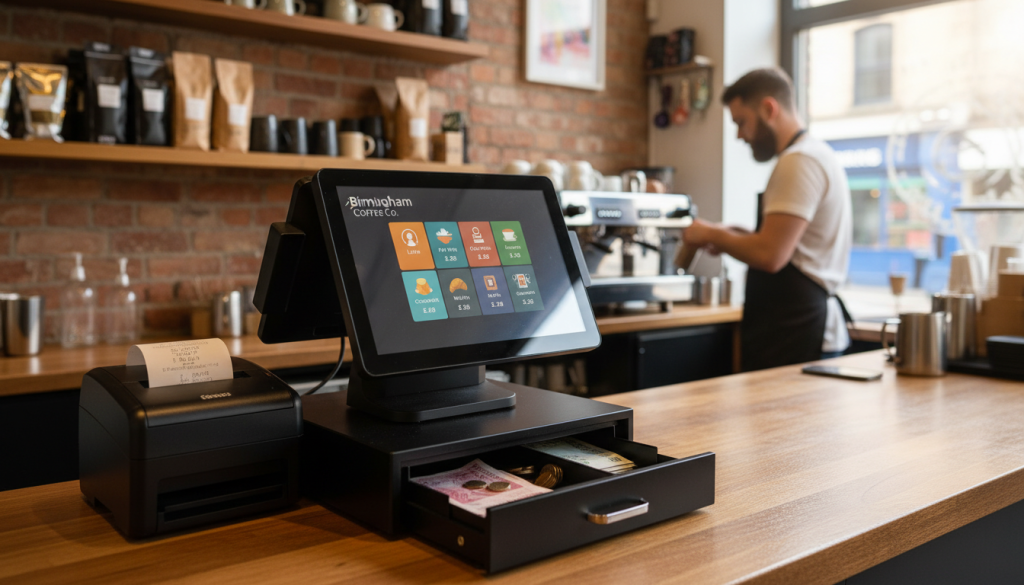
In the high-pressure world of hospitality, the difference between a thriving establishment and one that struggles often comes down to the efficiency of its internal systems. For decades, the “till” was simply a place to store cash. However, as the industry has evolved, so has the technology required to manage it. Today, implementing a high-performance epos for restaurant is no longer a luxury for fine-dining establishments; it is a fundamental requirement for any business looking to survive and scale in a competitive digital landscape.
The Bridge Between Front and Back of House
The primary challenge in any busy eatery is communication. When a server takes an order, that information must travel to the kitchen or bar instantly and accurately. A manual system—or even a basic digital one—often leaves room for error. Handwritten notes can be misread, and verbal instructions can be forgotten during a rush.
A professional epos for restaurant acts as a seamless bridge. By using handheld ordering devices or localized terminals, staff can input complex orders with specific modifiers—such as “no gluten” or “medium-rare”—and have them printed or displayed in the kitchen in real-time. This reduces the “travel time” of staff, allowing them to remain on the floor to attend to guests, which directly improves the quality of service and increases the potential for upselling.
Data-Driven Decision Making
One of the most human elements of running a restaurant is the passion for the menu. However, passion must be supported by profitability. One of the most significant advantages of a modern epos for restaurant is the depth of reporting it provides.
Instead of guessing which dishes are popular, owners can access granular data showing exactly what is selling and, more importantly, when. Detailed analytics allow management to identify “dead zones” in the week where staffing can be reduced, or “golden hours” where an extra bartender could double the revenue. This level of insight transforms a restaurant from a gut-instinct operation into a precision-run business.
Enhancing the Guest Experience
Today’s diners expect a frictionless experience. They want to order quickly, eat well, and pay without delay. Long waits for the bill are one of the most common complaints in the industry. An integrated epos for restaurant solves this by facilitating rapid payment processing.
Whether it is splitting a bill between six people, applying a promotional discount, or processing a contactless payment, a modern system handles these tasks in seconds. This efficiency ensures that the final interaction a guest has with the restaurant is positive, increasing the likelihood of repeat business and positive online reviews.
Inventory Management and Waste Reduction
In an era where food costs are rising, waste is the enemy of profit. A robust epos for restaurant helps manage inventory at a level that manual checks simply cannot match. By tracking every ingredient sold against the stock held, the system can provide “low stock” alerts or even automatically calculate the cost of goods sold (COGS).
This real-time tracking prevents the “86ing” of popular items mid-service—an embarrassing situation for servers—and ensures that the kitchen is always prepared for the expected footfall. By reducing over-ordering and identifying where waste is occurring, the system pays for itself through cost savings alone.
Future-Proofing for a Multi-Channel World
The modern restaurant is no longer just a physical space; it is a digital entity. Between third-party delivery apps, online booking systems, and click-and-collect services, orders are coming in from everywhere. A sophisticated epos for restaurant consolidates these channels into a single interface.
Instead of having multiple tablets for different delivery partners cluttered around the counter, all orders are fed directly into the main system. This prevents the kitchen from being overwhelmed by “invisible” orders and ensures that the timing for both in-house guests and delivery drivers is perfectly synchronized.
Conclusion: A Strategic Investment
In conclusion, the decision to upgrade to a dedicated epos for restaurant is a decision to invest in the longevity of the brand. It is the digital backbone of the operation, providing the structure needed for staff to excel and for the business to grow. By removing the technical friction of daily tasks, management can return to what matters most: the art of hospitality and the creation of exceptional culinary experiences. For the modern restaurateur, this technology isn’t just a tool; it is a partner in success
