
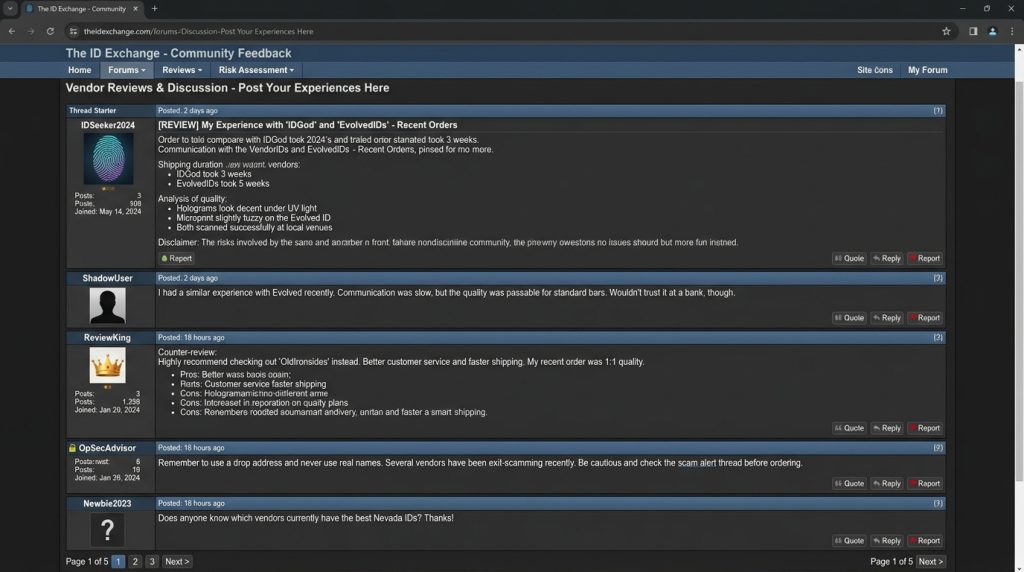
In the modern digital era, the market for novelty identification has transitioned from obscure corners of the internet to sophisticated, community-driven hubs. Whether for theatrical use, collection, or novelty purposes, finding a reliable source requires a significant amount of research. Because this industry lacks traditional regulation, the burden of verification falls on the consumers themselves, who have built robust networks to share their experiences and insights.
The Role of Community Documentation
When individuals begin their search for high-quality replicas, the primary challenge is distinguishing between legitimate artisans and fraudulent websites. This is where the power of collective intelligence becomes a vital tool. By participating in specialized communities, users can access a database of fake id forum vendors who have been vetted by hundreds of previous customers. These discussions often delve into the minutiae of production, such as the tactile quality of polycarbonate cards, the precision of micro-perforations, and the accuracy of OVI (Optically Variable Ink).
Peer-led forums provide several layers of protection:
- Quality Consistency: Vendors are monitored over time to ensure they aren’t “exit scamming” or lowering their production standards.
- Security Updates: Users frequently discuss new security features implemented by government agencies and which producers have successfully replicated them.
- Support Systems: Communities offer advice on secure payment methods and how to handle logistical issues like shipping delays.
Utilizing a Reliable Database
For those who are new to the scene, the sheer volume of information can be daunting. Navigating scattered threads and outdated posts often leads to confusion. To streamline this process, many enthusiasts rely on a dedicated fake id review site to find consolidated, up-to-date data. These platforms act as a central repository for user-submitted ratings, allowing for a side-by-side comparison of different providers based on specific criteria like scannability, stealth packaging, and turnaround time.
A structured review platform helps filter out the noise. Instead of relying on a single testimonial, you can view the “average” experience. If a vendor consistently receives high marks for their UV (Ultraviolet) features but fails on the “bend test,” a centralized review site will make that trend obvious. This transparency forces providers to maintain a high level of craftsmanship, as a sudden dip in quality is immediately broadcast to the entire community.
Understanding Market Trends and Risks
The industry is in a constant state of flux. What worked last year—such as certain holographic overlays or specific barcode encoding—might be obsolete today. Beyond just finding a product, these communities help users understand the broader market trends. For instance, as scanning technology becomes more advanced, the demand for high-fidelity 2D barcodes has skyrocketed.
However, it is equally important to acknowledge the inherent risks. Dealing with unverified sources can lead to financial loss or, worse, the compromise of personal data. By sticking to established communities and following the consensus of experienced users, you can significantly mitigate these dangers. Crowdsourced feedback remains the most effective “safety net” in an industry where trust is the most valuable currency.
Conclusion
Successfully acquiring a high-quality novelty ID is a process that demands patience and thorough investigation. By leveraging peer-to-peer feedback and keeping a close eye on vendor ratings, you can navigate the market with much higher confidence. In an environment defined by anonymity, the shared knowledge of the community serves as the ultimate guide to quality and reliability.
