
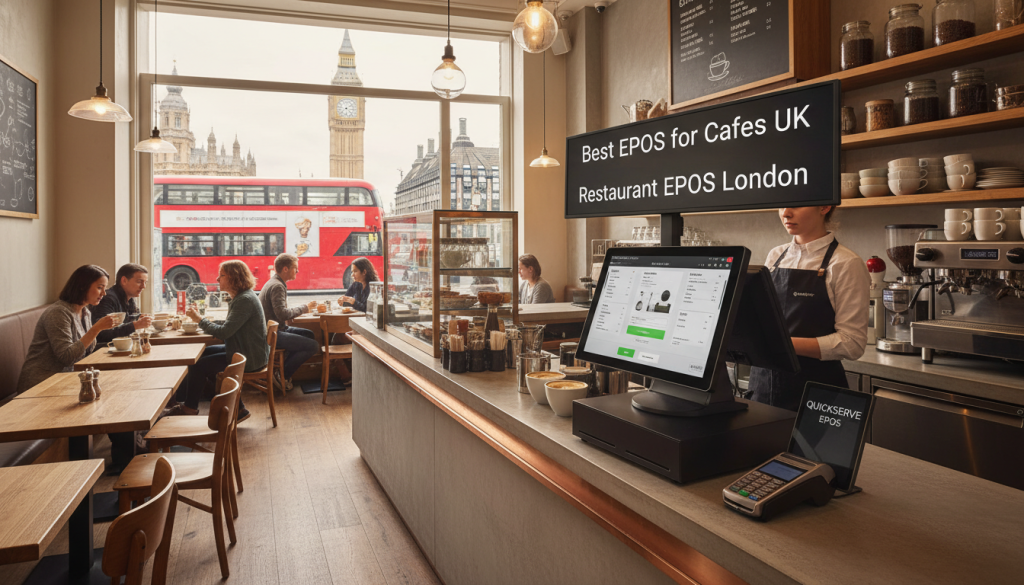
The British hospitality landscape is currently undergoing its most significant transformation in decades. From the artisanal coffee houses of the Cotswolds to the high-octane fine dining establishments of the West End, the “new normal” is defined by a delicate balance: maintaining high-touch personal service while managing increasingly tight operational margins.
As footfall fluctuates and consumer expectations for speed and digital integration rise, the technology sitting on the counter has shifted from a luxury to a strategic necessity. For modern owners, the choice of a point-of-sale system is no longer just about processing transactions—it is about capturing data, streamlining workflows, and reclaiming time.
The London Challenge: Speed and Precision in the Capital
Running a food and beverage business in London is unlike anywhere else in the world. With astronomical rents and a customer base that expects “instant” as a standard, the margin for error is razor-thin. When searching for a Restaurant EPOS London, savvy restaurateurs are looking for more than a digital till; they are looking for a command center.
In the heat of a Friday night service in Soho or Shoreditch, a delay of thirty seconds in sending an order to the kitchen can snowball into a service disaster. Modern systems solve this by offering:
- Seamless Table Management: Real-time visibility on table status, allowing for faster turnover and reduced wait times.
- Handheld Ordering: Empowering servers to take orders at the table side, which instantly fire to the kitchen, eliminating the “walk-back” time and reducing order errors.
- Integrated Payments: Speeding up the bill-paying process with split-check features and rapid card processing that keeps the queue moving.
By leveraging specialized solutions like those from Cube POS, London businesses can ensure their front-of-house staff spends more time engaging with guests and less time fighting with hardware.
The Cafe Revolution: More Than Just a Flat White
While London is the hub of high-end dining, the UK’s cafe culture is the backbone of the high street. For an independent coffee shop owner, the search for the Best EPOS for cafes UK often boils down to two things: reliability and simplicity.
Cafes operate on a “high-volume, low-ticket” model. This means that every second saved during the morning rush contributes directly to the bottom line. A system designed for this niche needs to handle complex modifiers—extra shots, dairy alternatives, and takeaway options—with minimal taps.
Furthermore, the rise of the “digital regular” means that loyalty programs must be frictionless. Paper cards are being replaced by digital ecosystems that track customer preferences and reward frequency automatically. When your EPOS understands your customers’ habits, you move from being just a shop to being a part of their daily routine.
Data-Driven Growth: Beyond the Transaction
The most significant advantage of modern hospitality tech is the “hidden” data it generates. Historically, small business owners relied on gut feeling to make decisions. Today, even a single-site cafe can access enterprise-level analytics.
By reviewing sales trends, owners can identify exactly which menu items are their “stars” (high profit, high popularity) and which are “dogs” (low profit, low popularity). This allows for dynamic menu engineering that maximizes profitability. In a climate where ingredient costs are volatile, having the ability to adjust prices or ingredients based on real-time wastage data is a game-changer for sustainability.
Integration: The Key to a Future-Proof Business
The modern UK hospitality business doesn’t exist in a vacuum. It likely uses accounting software like Xero, staff scheduling tools, and third-party delivery apps. The Best EPOS for cafes UK acts as the bridge between all these platforms.
Instead of manually entering end-of-day sales into an accounting sheet, the system does it automatically. Instead of juggling three different tablets for Deliveroo, UberEats, and JustEat, the orders flow directly into one kitchen screen. This level of integration reduces the administrative burden on owners, allowing them to focus on the creative and human aspects of their business.
Conclusion: Putting People First
Ultimately, technology in hospitality should be invisible. It should support the staff, delight the customer, and protect the owner’s investment without getting in the way. Whether you are seeking the most robust Restaurant EPOS London can offer or a sleek solution for a neighborhood cafe, the goal remains the same: creating an environment where hospitality can thrive.
As we look toward the future of the UK high street, it is clear that the businesses that embrace these digital tools will be the ones that have the time and resources to provide the authentic, human experiences that customers crave.
